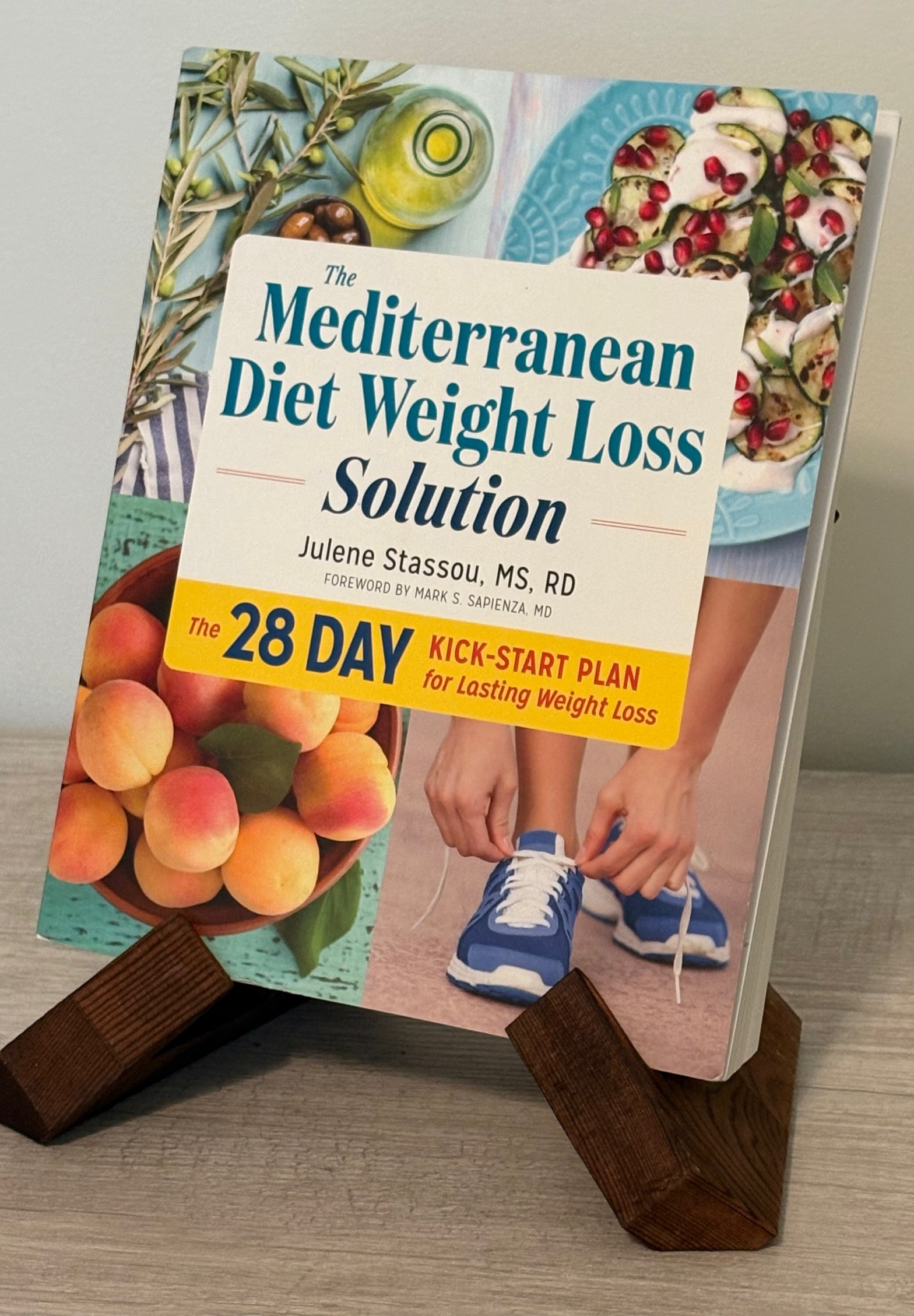
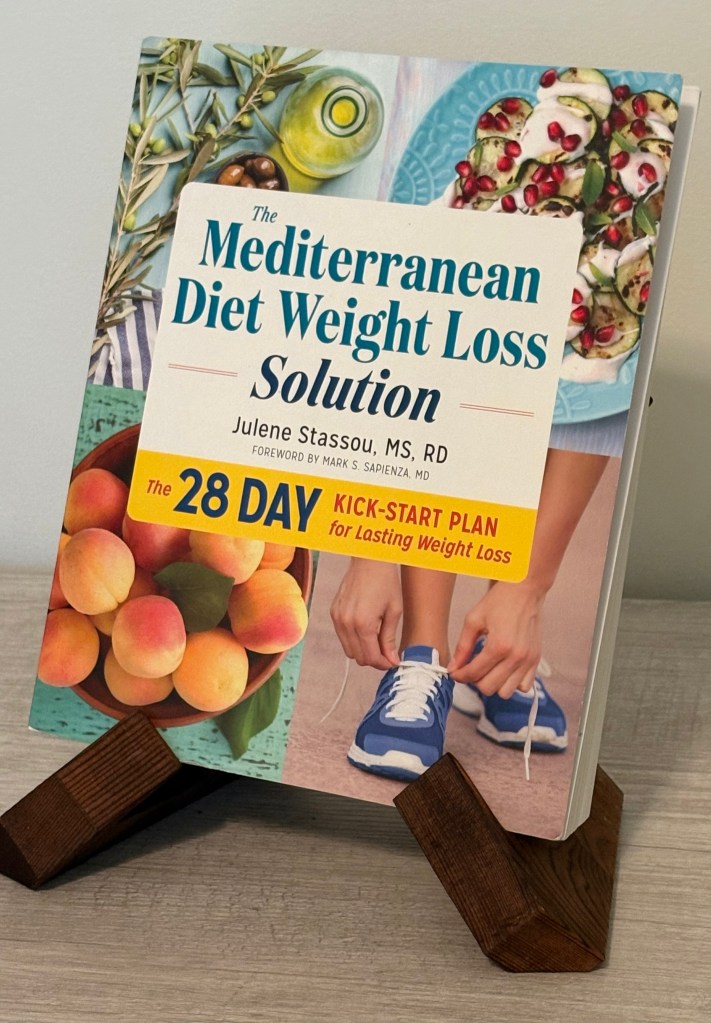
Last year my husband and I wanted to find a more healthy, sustainable lifestyle that included good food, exercise, and fun activity. It wasn’t that we ate poorly, but we felt like we were stuck in a bit of a ‘food rut’, so I bought a cookbook with the hope that it would offer us lots of variety as we embarked on our Mediterranean lifestyle. It’s a 28-day program for weight loss that includes not only a ton of recipes for breakfast, lunch, dinner and everything in between but also guidelines for exercise, what to do for the first 28 days AND how to keep your momentum for a lifetime of success. It’s called “The Mediterranean Diet Weight Loss Solution” by Julene Stassou, MS, RD. I have to say that I have never used a cookbook more, and I have several. I really like how the book is written – simply but intelligently – and I love the design and layout as well, with plenty of helpful tools to get you started and, more importantly, to keep you going.
First, let’s meet Julene Stassou. She is a registered dietician, having obtained her master’s degree in nutrition education from Columbia University. She also comes from a big Greek family so, you know, a foodie through and through both professionally and personally. 🙂 Her goal here is to educate us on not just what to eat but how to realistically incorporate different aspects of the Mediterranean lifestyle into our own lives and sustain them for a lifetime. She mentions that research throughout the years has shown that a Mediterranean lifestyle is not only practical, realistic, and affordable but sustainable too. There isn’t really any restriction, like in a typical ‘diet’, so we can eat the things we enjoy – she’s just going to teach us how to be smarter about it. So here’s the skinny . . .
The book is divided into 3 parts: Getting Started, Your 28-Day Commitment, and The Recipes. I’ll touch on each section and highlight a few things I think are pretty cool.
Part 1: Getting Started
The first part of this section compares and contrasts the Standard American Diet and The Mediterranean Diet. Yikes! To see them side-by-side is scary, as are the catastrophic effects of eating processed foods and not getting enough exercise and R&R. Julene lays out the Mediterranean food “pyramid” that looks very different than the one the U.S. government churns out. It’s full of whole foods, vegetables, fruits, whole grains, olive oil, fresh fish, lean poultry, eggs, and legumes. She also highlights the fact that the people of the Mediterranean are very active, and not because they go to the gym five days a week. They just, well, move more. Granted, the geographical layout of the cities as well as the climate lend themselves to being able to be outside more often and therefore they walk or ride bikes on a daily basis. Here, in the U.S., things are more spread out so we drive just about everywhere but that doesn’t mean we have to sit in front of our computers all day, every day either. We can make the effort to move more.
The next part tackles the topic of weight loss. She addresses caloric intake, the purpose and value of eating high quality protein, fats, carbs, and vegetables, giving examples of each. Then she dives into the Mediterranean approach to life which includes more than just food and movement; it must also include rest, relaxation, and mindfulness. In addition to eating fresh, good food and making time for exercise and activity, we need to set aside our to-do lists and focus on trying to get more sleep, chill out a bit, and make sure we do our best to adopt a more positive mindset.
When it comes to eating and figuring portion size, Julene offers some tips and tricks to kickstart the process – from reading food labels to choosing nutrient-dense foods to how to dine out. My favorite is “eat from plates, not packages.” (It’s a great way to make me stop and think about my food choice!) She also includes a visual graphic of portion sizes in relation to our own hands, i.e. fist vs. palm, etc., and even gives some common examples of foods that fit those ‘measurements’. Here, she also gives some pointers on how to recognize, and correct, bad habits. (There’s even a “Habit Tracker” we can use during the first 28 days to help us.)
Julene stresses goal-setting as an incredibly important part of the journey. She says that there are two kinds of goals: the outcome and the process. The Outcome Goal is what you want to achieve, however she says that these types of goals only give us a target; they don’t tell us how to get there. Enter: The Process Goal. These types of goals are the specific tasks or steps we take in order to get to the outcome; walking 30 minutes per day or adding 2-3 extra servings of fruits and vegetables every day are a couple of examples of process goals and are focused on creating new, healthier habits. She also identifies something called “SMART Goals” as essential to achieving the ultimate goal:
Specific . . . Measurable . . . Attainable . . . Realistic . . . Trackable
Julene addresses each one of these in more detail and even includes a weight loss plan worksheet to help us think about what we want and how to get there.
The final section focuses on exercise, rest, and relaxation. They are essential components of the Mediterranean lifestyle which is a much more holistic choice for not just weight loss but for life in general. Julene talks about the importance of exercise for our brains and our bodies and encourages a combination of activities for optimal results. Ideally we should do strength training as well as cardio but also says that every little bit helps, especially when we’re just starting out. She suggests doing a variety of things so that we avoid boredom and use different muscles, or throwing in a little interval training, or extend the time if possible. Here, there’s a graphic that outlines four weeks of a possible schedule to help us start a routine and even includes pages of simple exercises with explanations and drawings for us. Establishing a regular pattern will aid in creating a new habit that we can carry forward. Plus, you know, it’ll make us feel better. 🙂
Finally Julene talks about the benefits of staying hydrated by drinking lots of water and eating fruits and vegetables that have high water content. Not only does it make our skin look great but it helps us from overeating. She also encourages us to really make an effort to fit in rest and relaxation. Sleep is incredibly important, of course, but so is taking regular breaks throughout the day to breathe. If we don’t pause for a few moments our bodies will stay in a constant state of fight-or-flight and that leads to horrible consequences, both physically and mentally. Reducing stress helps us digest better, sleep better, improves our mood, and even helps us deal with everyday life.
Part 2: The 28-Day Plan
Ok! Now we can get into the nitty gritty details of the program! In this section, Julene reiterates that any kind of change of habit requires commitment. She wants us to make sure that we’ve really looked at our current habits, our goals, the time needed for the program, and our commitment to ourselves. She goes over a few last-minute details and reminds us to be patient with ourselves – this is not a quick fix. It’s a process. One that needs to be practiced. But it’s the first step to a lifetime of health and wellbeing, which is what we ultimately want, right?
For those who want or need everything to be laid out for them with step-by-step instructions, this is for you. Even if you don’t necessarily need meal plans, but want tips, tricks, ideas, and helpful tools to aid in your journey, don’t skip this part! Everyone needs a little help!
The next part of the book is divided into four weeks. Each week includes the following: a complete shopping list, what to make ahead of time, a full 7-day menu with breakfast, lunch, dinner, and suggested snacks, plus a page dedicated to recording your exercise routine and tracking your habits throughout the week.
The shopping lists contain the amounts or weights for everything and the menus include pages numbers for all of the recipes. By the way, the meals outlined here are very filling – and I love that leftovers are built into the week. For me, that’s a huge bonus because my work schedule doesn’t allow me to be at home to cook every night. (Plus, I’m just not that into cooking . . .) At the beginning of each week, Julene talks about the benefits of our new habits, what to expect in the week to come, and adds a couple of tips and tricks to keep us going. And, as always, she encourages us to pat ourselves on the back for making the commitment and sticking to it. By the end of four weeks we’ve made significant strides toward establishing healthier eating and exercise habits that we can take with us as we move forward.
The final section of Part 2 is what sets this book apart from others I’ve read. It goes beyond the first 28 days. Here, Julene explains that we have the tools to continue our journey of losing weight and/or living a healthier lifestyle but that sometimes we have to make adjustments. That’s ok. We just need to remember that we are in charge, we need to prioritize ourselves, we must continue to include ourselves in the process, and we should remember our long-term goals. She also reminds us that the more we practice this new way of living, the better we’ll get at it, and the easier it will become to fend off old habits and keep our eyes on the prize. Julene encourages maintaining an actual written exercise plan that fits with our schedules and, when it comes to fighting off cravings, she says to remember the “3 Ds”: DRINK more water, DETOUR the craving with a better food choice, and DISTRACT ourselves by doing something else. She offers more tips and tricks for success, two more weeks of menus, and a blank menu so that we can fill it in with our favorites or experiment with other recipes.
Part 3: The Recipes
Woo hoo! On to the good stuff!!! The final part of the book is all recipes – nine sections of them! Here, Julene breaks everything down into groups rather than meals of the day. For instance, she begins with Breakfast and Snacks, but the rest of the categories are divided into Soups and Salads, Fish and Seafood, Beans, Legumes, and Vegetable Mains, etc.
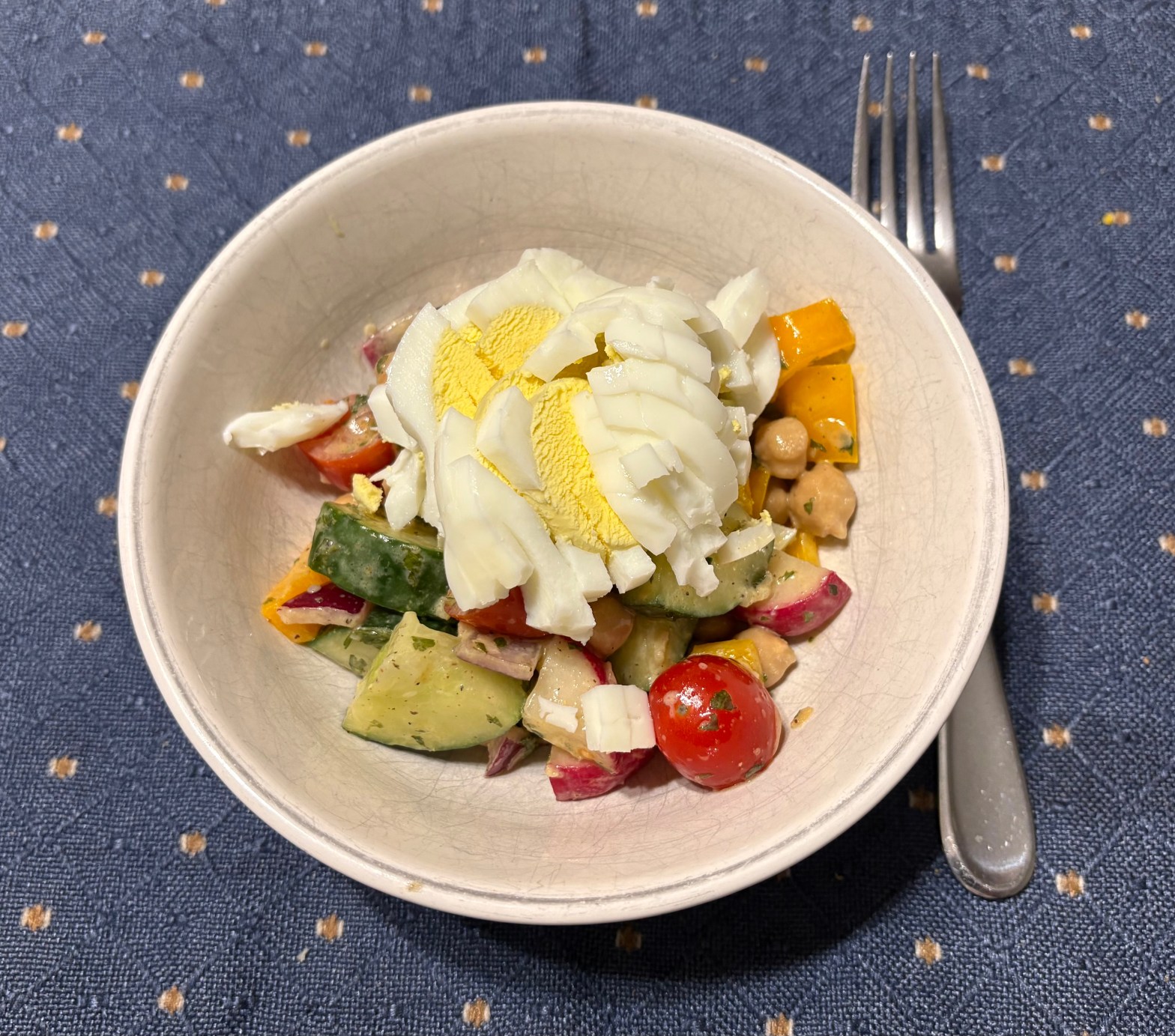
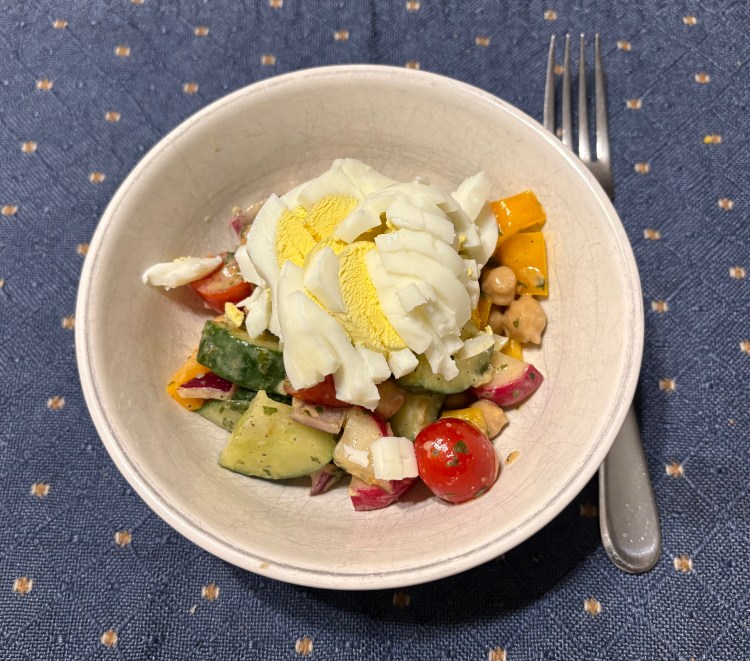
Each page is dedicated to one recipe and they’re incredibly detailed. Julene not only lists the ingredients (and amounts of each) but how many servings it makes, how long it takes to prep as well as cook, a brief description of the dish, and easy-to-follow instructions. She even breaks down calories, fats, carbs, protein, sugars, fiber, cholesterol, sodium, etc. per serving for us so that there’s no guesswork. Another really awesome feature included with nearly every recipe is some kind of tip. It could be a cooking or preparation tip, how to make it a meal, a blurb about one of the ingredients, or a variation of the dish. I especially appreciate the substitution tips. If you have an allergy or are vegetarian or vegan, many times she offers alternatives to the ingredients so that you can enjoy the dish without having to sacrifice physical health or principles. A few of our favorite dishes are Moussaka, One-Pan Tuscan Chicken, and Shrimp Scampi. Oh! And Chop Chop Salad. The smoothies are good too! Anyway . . .
Julene rounds out the book with a recipe index, resources, credits, and the Dirty Dozen and Clean Fifteen lists. (They’re from 2017 but it’s easy to find the most recent lists on ewg.org) And, for those of us who are challenged by conversions, Julene includes a conversion chart for volume, weights, and temperatures.
My husband and I really do love this book. It offers a realistic and holistic approach to health and wellness that we can sustain for the rest of our lives. It’s not a restrictive ‘diet’ (I shudder at the word!), nor is it a fad that only works for a short period of time. It truly is a way of life that delivers delicious food, a positive outlook, and fun activities for achievable and sustainable health for years to come.
If you’d like to purchase this book, click here. For less that $20, it’s a steal!
***Please note that, while I absolutely love the book, use it all the time, and would never steer you wrong, I earn a tiny commission for sales that result from clicking on the link to the book’s Amazon page.***
The information provided on this website is intended for educational purposes only and is, in no way, a substitute for professional medical advice. The events, practices, and opinions discussed here are those of the author and should be treated as such. ALWAYS talk with your doctor about conditions, medications, and concerns you have about your health and work together to determine the best course of action for you.

 Wholeness Health and YOU!