Nervous System Reset: Day 7

Physiological Sigh. That’s what Rachel Fearnley calls it. I’m not really sure how I feel about it to be honest. I mean, I like breathwork but this didn’t feel like comfortable to me. It might be different for you.

In our lesson, Rachel tells us that by doing this breathing pattern it helps to promote clarity, to calm the body, and to reduce feelings of stress. She invites us to move or make sounds should that feel right. She also reminds us that if it doesn’t feel good, or it creates overwhelm, then we should return to normal breathing patterns. Here’s the recipe: breathe in, take another short breath in, then let it out with a sigh, lengthening the exhale. So, in, in, long sigh out. In, in, long sigh out. Rachel says that the two breaths in are meant to fill the lungs completely and the long exhale is supposed to be a signal to the nervous system that it’s safe.

After a few rounds she encourages us to let our bodies move with the rhythm of the breathing pattern. Maybe our shoulders go up a little, then down. Or maybe move our arms. Or maybe some swaying. Then she suggests that perhaps there’s a sound that wants to ‘escape’. A louder sigh. Or some sound associated with frustration or sadness or any other emotion we may feel. Let it out, she says. Let it happen.

I tried once and decided it wasn’t for me. And that’s ok. I guess I’m not a let-it-all-out kinda gal. How did you feel during this meditation? Did you feel moved to vocalize your emotions? How did that feel? Did you move with the rhythm of your breath? I’m curious to know what you think of this lesson.

In the meantime, I hope you find some time to yourself so that you can recharge and reset. Have a wonderful evening!

#nervoussystemresetchallenge

#letitout

The information provided on this website is intended for educational purposes only and is, in no way, a substitute for professional medical advice. The events, practices, and opinions discussed here are those of the author and should be treated as such. ALWAYS talk with your doctor about conditions, medications, and concerns you have about your health and work together to determine the best course of action for you.


Nervous System Reset: Day 6

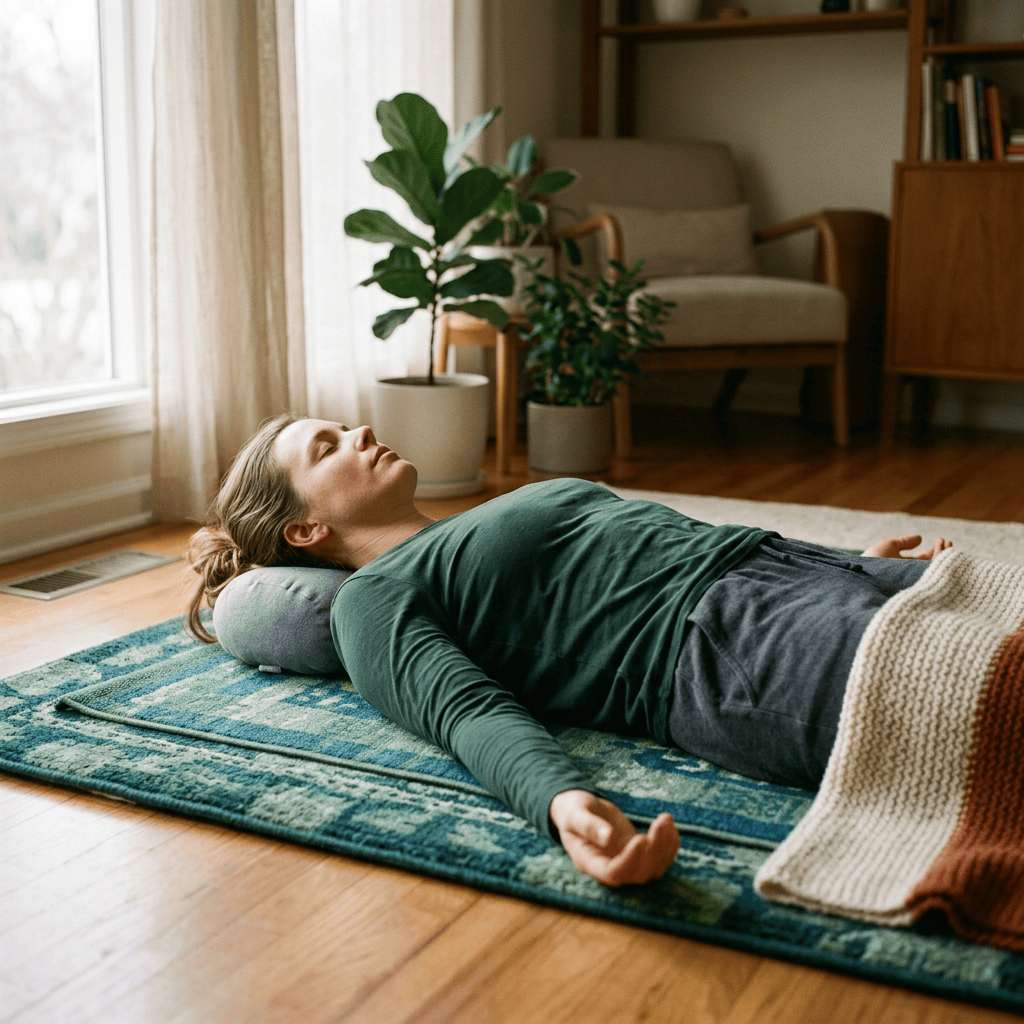
Today was all about being comfy and safe. Tramaine Cato brings us back to the sensation of touch, though not as an active participant but rather as a passive observer. By connecting the body and its sensations, we can teach the nervous system to regulate itself. She lets us decide which position we’d like to be in for the meditation – but whatever we choose should be comfortable.

She begins by telling us to feel the sensation of whatever supports our bodies. Then rest there for a bit. Then she encourages us to feel our breathing, the natural rhythm of it. She suggests deepening the breath. Throughout the whole process she wants us to simply notice what’s going on without labeling, without fixing – just be. It’s ok to just be here. Notice if parts of our bodies feel tense. Notice if there’s calmness. Even sensations of discomfort should simply be observed. Tramaine wants us to sit with all of the things we feel without judgment. And by doing all of these things we’re teaching our bodies that we’re in a safe space, letting the sensations come and go.

It’s not easy to just be in the moment or feel things without trying to explain them, create a story about them, or wonder where they came from but I think this exercise is a great way to practice the art of noticing them – then letting them go.

What did you think of today’s lesson? Did you find it easy or difficult to practice this? Let me know in the comments.

Hope you have a great rest of your day!

P.S. Go to the Day 5 post if you weren’t able to see what mesmerized me yesterday. 😉

#nervoussystemresetchallenge

#justbe

The information provided on this website is intended for educational purposes only and is, in no way, a substitute for professional medical advice. The events, practices, and opinions discussed here are those of the author and should be treated as such. ALWAYS talk with your doctor about conditions, medications, and concerns you have about your health and work together to determine the best course of action for you.

Nervous System Reset: Day 5

Continuing with our exploration with the senses, Bhanu Joy Harrison joins us in the practice of Sensory Orientation. Day 4 was all about touch. Day 5 is about sight and sound. Admittedly, this is something I prefer over touch but not something that I actively practice as a way of grounding myself. I like sitting in silence most of the time. Occasionally I have a very low background noise, like Insight Timer’s “Enchanting” which sounds like a bunch of monks chanting. At first I didn’t really enjoy it but once I lowered the volume I found that the vibration of the singing was actually incredibly soothing.

Bhanu Joy says that by letting your gaze scan the room and your ears take in the sounds, without stories, analyzing, or naming, you allow yourself to be curious about your surroundings. Consequently, once your senses have determined that the space is safe, your body can come back to center. To the here-and-now rather than wallowing in the past or worrying about the future.

First, we let our eyes wander in every direction. We notice shapes and colors. We simply take in what we see. No explanations. Just notice. (Unfortunately for me I also noticed how cluttered my space was and it instantly set my teeth on edge. Can you say “sensory overload”?!?!) Then we move on to sounds. There wasn’t much going on in the room. Nothing going on outside either. I sat very quietly for a few moments and noticed the gentle whirring noise of my essential oil diffuser. My eyes focused on it, noticing the mist as it billowed over the sides and dispersed across the surface of the shelf. Swirling. Falling over the edge. Dissipating. My eyes then drifted to the constantly changing colors of the diffuser as it danced through the tree limbs etched all around it. Green morphing to yellow. Orange deepening to red then brightening through lavender to purple. Dark blue transforming into sky blue followed by aqua, then returning to green. And so the cycle continued again . . . and again . . . whirring . . . dancing . . .

Next thing I knew, Bhanu Joy was wishing me well. The meditation was over.

I hadn’t expected to have this profound a reaction to the exercise. I was pleasantly surprised. I was also a bit perplexed – I had to backtrack to listen to what I’d missed which, thankfully, wasn’t really that much. She asked us to pay attention to how our bodies felt after our practice and I have to say that I was pretty cozy. I switched to the timer and meditated for another 15 minutes or so, mesmerized by the dancing lights, the soothing sounds of the tiny motor, and the delightful aroma of lavender. The experience lulled me into a state of deep relaxation and contentment. It reminds me of evenings spent around a campfire, sitting quietly, listening to the crickets and the crackle of the fire, watching the flames dance and play on the logs.

Did you enjoy the lesson? What sensory experiences have you had that invite deep meditation or relaxation? What’s your go-to sense for meditation? I’d love to know your thoughts.

I hope you enjoy the rest of your day. Love and light . . .

P.S. If you can’t see the “movie” at the top, view it on the website . . .

#nervoussystemresetchallenge

#sensoryorientation

The information provided on this website is intended for educational purposes only and is, in no way, a substitute for professional medical advice. The events, practices, and opinions discussed here are those of the author and should be treated as such. ALWAYS talk with your doctor about conditions, medications, and concerns you have about your health and work together to determine the best course of action for you.

Nervous System Reset: Day 4

I know. It’s late. My apologies. I was tending to some family stuff . . .

Scarlett Grace, our teacher today, led us through a session where she introduced “self-soothing touch”. Touch can be an important and very personal human experience. Scarlett tells us that touch is one of the ways we teach the body that it’s safe. It takes us outside of our brains and into our bodies. Instead of thinking our way out of stress, touch gives our bodies comfort, therefore calming us down. Then the nervous system can relay the message to the brain that everything is ok and that it’s safe to relax.

It was interesting, though I’m not really sure it’s my cup of tea. I’m not a tapper. Occasionally I’ll lay a hand on my belly or on my heart, but that’s about it and typically because it’s part of the guided lesson I’m listening to. Usually my hands are kind of folded in my lap or my index finger and thumb are touching, forming a circle. That’s about all I need to feel grounded and centered. But if this is a technique that you enjoyed and would actually use, then by all means go for it.

I hope that you had a great day and that you get lots of rest tonight.

Namaste.

#nervoussystemresetchallenge

The information provided on this website is intended for educational purposes only and is, in no way, a substitute for professional medical advice. The events, practices, and opinions discussed here are those of the author and should be treated as such. ALWAYS talk with your doctor about conditions, medications, and concerns you have about your health and work together to determine the best course of action for you.
Nervous System Reset: Day 3

The Extended Exhale.

Kirsty Lyon is back! She explains that when we react to a stressor our breath changes. It often becomes shorter and faster. It’s what prepares us to respond to whatever we’re dealing with at the moment – whether real or perceived. I imagine that, way back when, this is what saved the cavemen from being eaten by some crafty predator and then they calmed down once they were safe. But in this day and age, there isn’t always an end to the stressor. And when our bodies are constantly “at the ready” even though there’s no threat, it leads to chronic stress and we all know that’s not good. But Kirsty says that we have some control: breath. By purposely changing the rhythm of our breath, we can regulate the nervous system, show our bodies that they’re safe, and finally return to center.

Here’s her technique: inhale for 3 counts, then exhale for 6 counts. That’s it. She says to inhale through the nose, then let the breath out through the mouth, allowing the body to relax a little more each time. Then she suggests inhaling for 4 counts and exhaling for 8 counts. I found this one a bit more difficult to manage. I felt like, in order to get to count 8, I had to force the air from my lungs. That seemed to go against the whole idea of relaxing, so I went back to the original 3/6 count method.

After the lesson, I meditated for another 15 minutes, practicing the 3/6 count on and off. I noticed that whenever my mind began to wander, my breath changed, so I did another few rounds or so of the 3/6 count until I was able to go back to normal breathing. I felt pretty relaxed by the end and answered the question at the end of the lesson: when would I use this technique? I chose “before sleep”. I think this might be a good way for me to prepare myself for bed, to get nice and relaxed and sleepy so I could drift off . . .

Did you like this technique? How did you feel afterward? Could you see yourself using it? When? I’d love to know your thoughts. Hope you have a great Friday and a restful weekend!

#nervoussystemresetchallenge

#breathe

The information provided on this website is intended for educational purposes only and is, in no way, a substitute for professional medical advice. The events, practices, and opinions discussed here are those of the author and should be treated as such. ALWAYS talk with your doctor about conditions, medications, and concerns you have about your health and work together to determine the best course of action for you.
Nervous System Reset: Day 2

Well, I wasn’t really planning on documenting this challenge but today’s lesson was pretty cool too. I’ll keep it short and sweet. I promise.

Contact. Pressure. Sensation.

That’s pretty much it. Chibs Okereke rejoins us and explains that when the nervous system is stimulated our go-to reaction is brain-based. We ponder. We worry. We try to think our way out of the situation. Instead, we could concentrate on a body-based skill called “grounding”. He says that by grounding ourselves through touch we stabilize ourselves in the physical moment. What’s real. Right now.

During the session he asks us to take a deep breath or two, then focus our attention on where our feet meet the surface. How our hands rest on our thighs. How our backs feel against the chair. You get the picture. Then he tells us to put a little pressure in those areas and notice how it feels. Key word here: notice. Not think. Not judge. Not tell a story. Just notice. Finally, when we release the pressure we’re asked to notice any residual sensations. Again, just notice. I pressed my hands together and when I let go I noticed that there was a sense of relaxation. I tried it on my feet. Same. I wrapped my arms around my shoulders and squeezed. When I let go I felt like my shoulders kind of relaxed even more than before. Interesting.

At the end of the session we’re asked to imagine how we might use this technique. I chose “in transitions during the day”. I could totally see myself doing this to prepare for work, or when I get into my car before I go home. Just to give myself a moment to shift gears from one activity to the next. Do you see yourself using this technique? How? I’d love to know your thoughts.

Hope you have a great day!

#nervoussystemresetchallenge

#groundthroughtouch

#loveandlight

The information provided on this website is intended for educational purposes only and is, in no way, a substitute for professional medical advice. The events, practices, and opinions discussed here are those of the author and should be treated as such. ALWAYS talk with your doctor about conditions, medications, and concerns you have about your health and work together to determine the best course of action for you.
Nervous System Reset: Day 1

Huh. Well that was really rather interesting. I definitely learned something today.

Dr. Juna Bobby (whose voice is quite calming, actually) explains that stress is a fact of life. We can’t avoid it. In fact, she says that our “stress response” is what keeps us alive. That’s a good thing. The problem comes when we don’t come down from that stress. Citing Dr. Bruce McEwen‘s research on the effects of stress, she says that if we don’t regulate the nervous system often enough, stress accumulates in our bodies. Dr. McEwen called it “Allostatic Load”. It’s the constant, heightened state of stress that takes a devastating toll on the body if we don’t do something about it. Basically, bad things happen like a domino effect. Each system affects other systems until finally they collapse.

Crikey!

Dr. Juna goes on to explain that we often try to just “think” our way out of the stressful situation. The problem, however, is that stress responses are automatic in our bodies. We feel them in our bodies. So trying to think our way out if it doesn’t always work. (Which also explains why, when someone tells me to “just calm down”, it drives me nuts and makes me want to slap them upside the head.) She then explains that the vagal nerve, which elevates the parasympathetic system (the one that tells our bodies to “rest and digest”), is responsible for 80% of the messages sent from our bodies to our brains. So if we can create a feeling of safety within our bodies, they will then tell our brains to chill out.

Holy moly!

Ok, so how do we do that? Dr. Juna says that breathwork is probably the easiest way to show our bodies that we’re safe and that we can calm down. She also says that slow, deep, or rhythmic breathing is best. The more we practice it, the better we get at it. And the stronger our “vagal tone” becomes, the easier it is to come down after experiencing stress. She introduces an exercise in which we breathe in for five seconds, then breathe out for five seconds. She leads us through the breathing, counting for us, then drops it back to simply “inhale” and “exhale”. I’ll admit that the first breath was difficult for me because I inhaled a little too much too quickly and ended up holding my breath for a second or two until I was allowed to release it. Once I figured out how to pace myself, I was able to keep up. If you find that a 5-second count is too much for you, you can always modify it by either counting for four seconds in and four seconds out. Another method could be to inhale for four, hold for one, exhale for four, hold for one. It’s up to you.

After the session I felt pretty calm, to be honest. My body was more relaxed. My brain wasn’t bouncing all over the place. I feel like I can handle things that come up in a calmer, more mindful way. This is a handy little tool for when things get a little crazy and I’m going to use it for sure. Simple. Easy. Doesn’t take long to do. Yep. I like it. I hope you do too.

Love and light . . . have a great day!

#nervoussystemresetchallenge

#breathe

The information provided on this website is intended for educational purposes only and is, in no way, a substitute for professional medical advice. The events, practices, and opinions discussed here are those of the author and should be treated as such. ALWAYS talk with your doctor about conditions, medications, and concerns you have about your health and work together to determine the best course of action for you.
Nervous System Reset Challenge

Hey there, Fellow Meditators!

Do you sometimes feel overwhelmed, stressed, constantly on the go, and/or just overloaded with everything going on in life? Do you suffer from lack of sleep, brain fog, and/or other physical issues such as poor digestion? Would you like to learn a few skills to help you regulate your nervous system when things start to get out of hand?

You’re in luck!!! INSIGHT TIMER IS HOSTING ANOTHER FREE CHALLENGE!

Topic: Nervous System Reset Challenge

When: February 18 – March 1, 2026

Duration: 12 days

They’ll teach us how to calm things down when we get overstimulated through movement, breathwork, sound, etc. I’m looking forward to it! Things have been a little nutto the past few years and I could really use some different techniques to reduce the crazy so that no one finds me in a corner sucking my thumb. 😳

I hope you’ll join me for this new adventure. I haven’t decided yet if I’ll write every day of the challenge or not . . . I’ll let you know.

In the meantime, if you haven’t downloaded the Insight Timer app, go to the Stuff I Love! page, make sure you know which app to look for, then download it and create your account! It’s free and totally worth it!

Until next time, love and light to all!

#nervoussystemresetchallenge

#InsightTimer

The information provided on this website is intended for educational purposes only and is, in no way, a substitute for professional medical advice. The events, practices, and opinions discussed here are those of the author and should be treated as such. ALWAYS talk with your doctor about conditions, medications, and concerns you have about your health and work together to determine the best course of action for you.
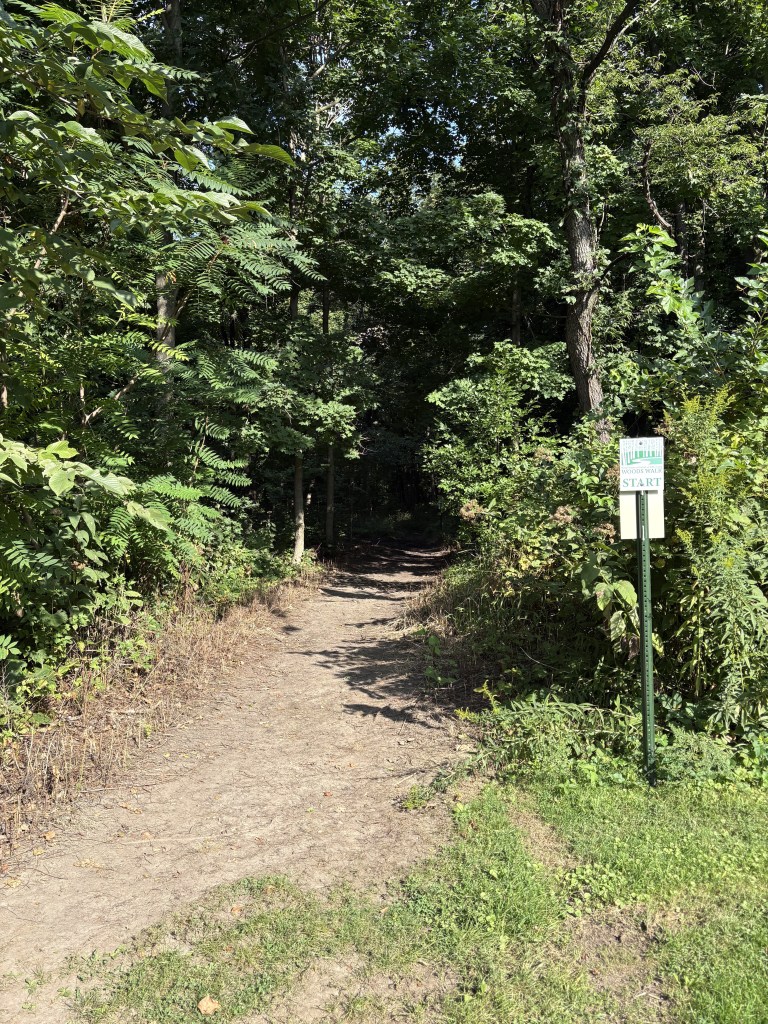
Woods Walk 2025 – Update

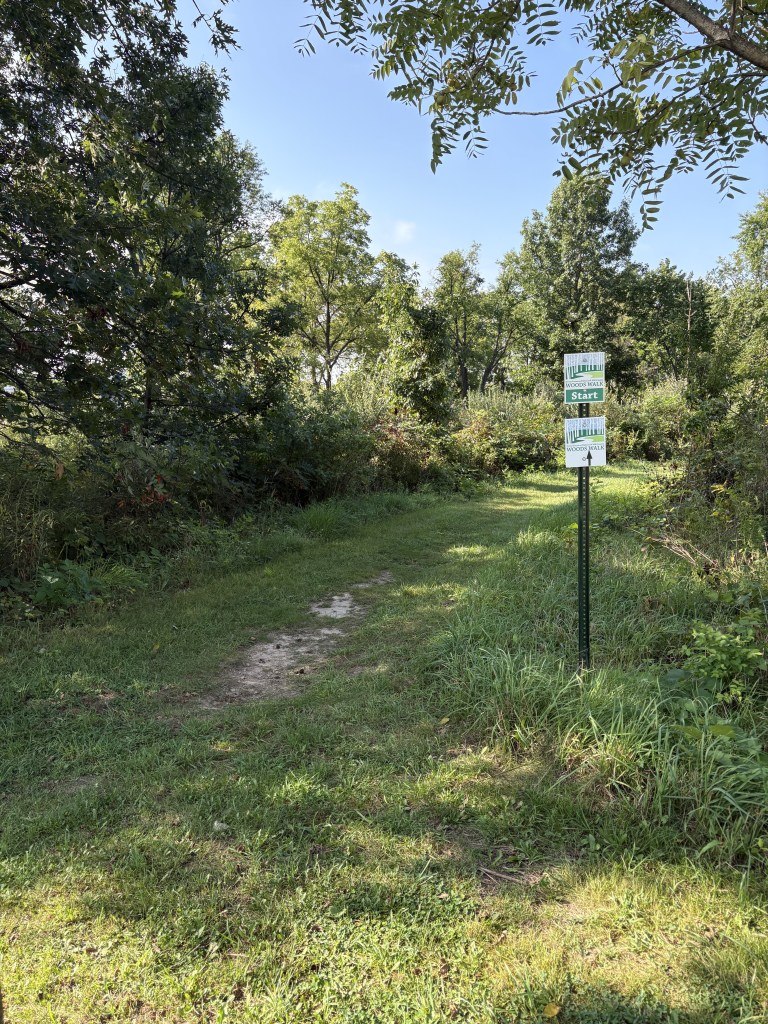
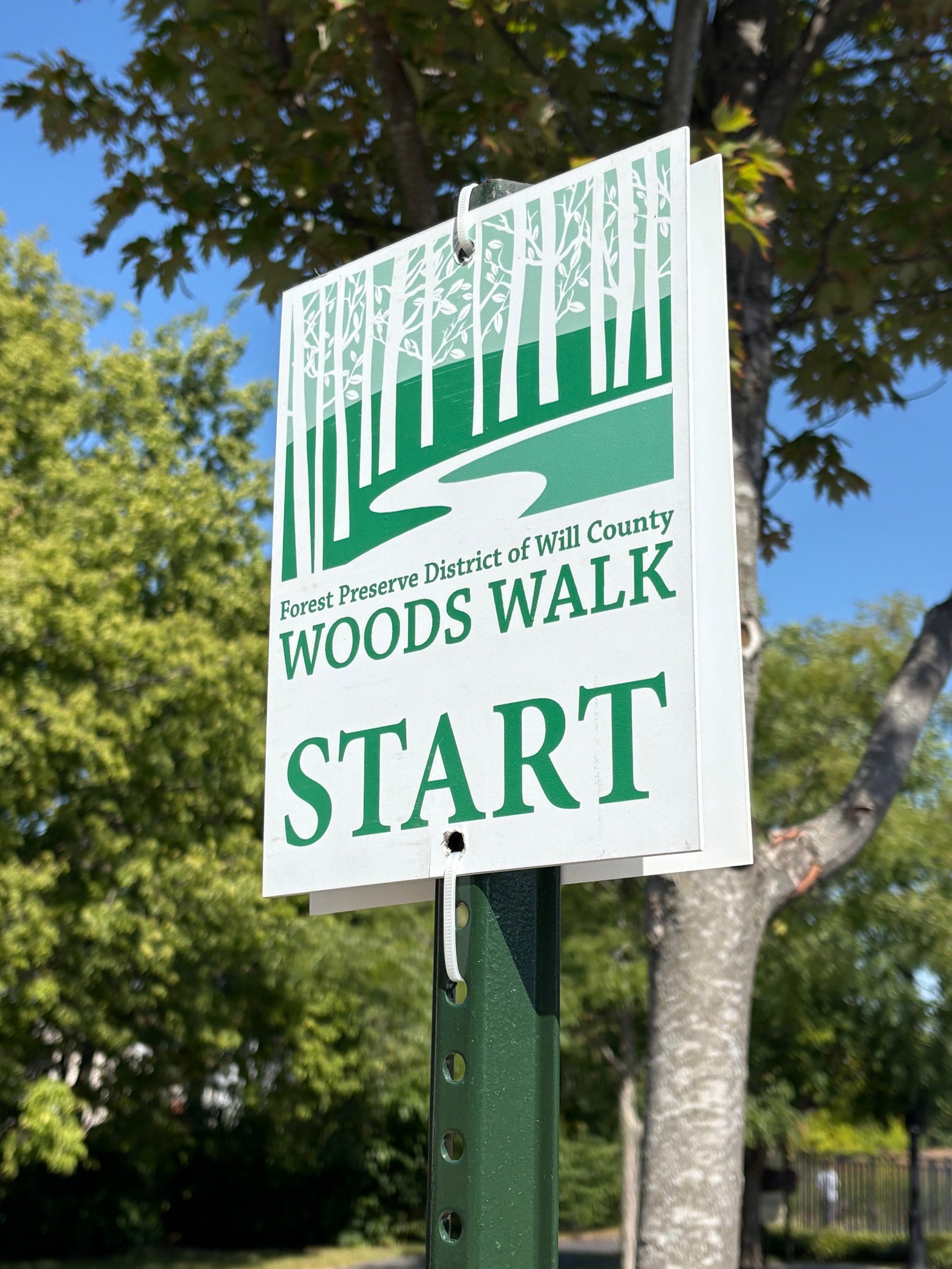
I know, I know. It’s 2026 and the Woods Walk ended November 30. Holidays. Life. Laziness. Everything got in the way . . . but we got our medallions!!!

Now I guess I just need a walking stick . . .

#happyhiking

#WoodsWalk2025

The information provided on this website is intended for educational purposes only and is, in no way, a substitute for professional medical advice. The events, practices, and opinions discussed here are those of the author and should be treated as such. ALWAYS talk with your doctor about conditions, medications, and concerns you have about your health and work together to determine the best course of action for you.
Daily Intention Setting: Wrap-up

February 1

We did it! We achieved 31 straight days of setting a daily intention for ourselves. I think that deserves a little pat on the back!!! Some sessions resonated more deeply with me than others, which is to be expected, but there were a few that I would love to listen to again and again. Overall, I learned a lot during the experience and I’m so glad I did it because now I have a much better idea of how to set an intention for myself every day. I would like to have a purpose for my meditation (and my day!) rather than feeling so aimless and floppy. And if I have any trouble creating a focus, I’ve decided to print out a calendar with each day’s focus so that I can choose something that speaks to me. Here’s a quick recap of each day’s focus and intention in case you’d like to do the same:

1: Begin again – A fresh start“Today I will start fresh and give myself a clean slate.”
2: Let go – Make space“Today I will put down what I no longer need to carry.”
3: Choose – Who I want to be“Today I will remember who I want to be.”
4: Presence – Be here now“Today I will live from here.”
5: Clarity – What matters most“Today I will move in a way that is rooted, clear, and open to what is possible.”
6: Gratitude – Notice what’s good“Today I will notice what’s going right instead of what’s missing.”
7: Joy – Rediscover simple pleasures“Today I will look for something that makes my heart smile.”
8: Simplicity – Let things be enough“Today I will choose the simple way without guilt.”
9: Purpose – What drives you“Today I will remember that I am in control of my own life.”
10: Strength – Trust your steadiness“Today I will trust my calm more than my fear.”
11: Compassion – Be kind to yourself“Today I will meet myself and others with compassion.”
12: Balance – Return to your center“Today I will rest in the fact that I’ve done enough.”
13: Patience – Let things unfold“Today I will let things unfold in their own time.”
14: Rest – Go easy on yourself“Today I will choose rest instead of pushing through.”
15: Acceptance – Be as you are“Today I will stop fighting what is and soften into it.”
16: Courage – Take one step“Today I will do the small brave thing that’s been waiting.”
17: Connection – You’re not alone“Today I will reach out instead of waiting to be reached.”
18: Confidence – Trust yourself“Today I will trust myself instead of doubting every move.”
19: Worthiness – Your inherent value“Today I will remember my worth is inherent.”
20: Boundaries – Protect your energy“Today I will listen to my inner yes and no.”
21: Kindness – Act with care“Today I will do something kind with no expectation back.”
22: Trust – Let things be“Today I will step back and let love lead the way.”
23: Appreciation – Being held“Today I will thank someone who quietly makes life easier.”
24: Stillness – Time to pause“Today I will pause before I act and let calm lead the way.”
25: Regulate – Don’t feed the frenzy“Today I will notice when my thoughts run ahead of reality.”
26: Honesty – Tell yourself the truth“Today I will be honest, even if it’s uncomfortable.”
27: Listening – Being present“Today I will listen to understand, not to answer.”
28: Humility – We’re not always right“Today I will stay open instead of assuming I know.”
29: Hope – What’s possible“Today I will believe that good things can still happen.”
30: Rooted – Stay steady in yourself“Today I will stand in who I am, without shrinking.”
31: Growth – Be the change“Today I will remember that steady steps build lasting change.”

I hope that you enjoyed the challenge and that you feel that you have a handy new skill to help you set your intention each and every day. I hope it brings you peace and strength. Thanks so much for following along with me! And congrats on a job well done!

Let’s remember the intro for every day of the challenge and let it lead us forward:

“Setting an intention is making a decision about who you want to be and how you choose to show up. Over time, those choices become change.”

#31dayintentionsettingchallenge

#liveintentionally

#trusttheprocess