“Soul-Centered” – Week 2 Check-In

Hello there! It’s time for a check-in to see how Week 2 is going. My hope is that you’re beginning to make meditation a daily practice and that you’re noticing some positive changes. I also hope that you’ll share some of your experiences thus far. Please check out the questions below, feel free to answer some, or ask your own questions.

  • How are you feeling this week?
  • What are your thoughts on the Sitting Meditation? What do you notice during meditation? How about afterward?
  • Have you tried any of the Peacefinder exercises? Which one(s)? What did you notice before, during, and after the exercise(s)?
  • What do you think of Long, Slow, Deep Breathing? How does it help you during or after your meditation?
  • How are you able to stay consistent with scheduling your meditation times? What is working well for you? Any challenges? How did you overcome them?

I hope that you’re starting to feel more centered with each meditation and that it is becoming a positive experience for you. Please feel free to comment or ask questions. (Comments are not made public until approved. If you’d rather keep it private you may state that in your comment or message me separately.)

I hope you have a fantastic week!

The information provided on this website is intended for educational purposes only and is, in no way, a substitute for professional medical advice. ALWAYS talk with your doctor about conditions, medications, and concerns you have about your health and work together to determine the best course of action for you.

Becoming “Soul-Centered”: Week 2 – Peace: Less Stress

Week 1 is in the books! Congratulations! Hopefully you were able to start to create a healthy meditation habit and gain a little present moment awareness. It’s amazing what happens when you slow down a bit and concentrate on one thing at a time!

This week, the focus is on finding peace and reducing stress. We deal with stress all the time, from running late and encountering a traffic jam to trying to meet a deadline to participating in a sport or activity. It’s just a part of life. Some stress is good. Too much stress is not. The problem with stress, though, is that we don’t really pay attention to how it’s affecting us until there’s a cataclysmic event that shakes us up. My own wake-up call came in the form of an SVT event that gave me a ride in an ambulance and an overnight hospital stay, complete with blood tests, an echocardiogram, and a stress test. (By the way, SVT stands for supraventricular tachycardia. Basically, it’s kind of a short-circuit of the heart, causing it to race for no reason. Kinda scary if you don’t understand what’s happening!) Anyway, Sarah says that buildup of stress causes us to think, feel, and act in all kinds of ways – and the effects on our bodies and brains can cause negative consequences in our lives as well. She has the perfect analogy: “stress accumulates like dust settling on a glass table. You don’t notice it until it is thick and you have to do something about it!”

Sarah goes on to explain all kinds of causes of stress as well as their effects. Not only do we suffer physical problems like insomnia, grinding our teeth, recurring illnesses, and heart palpitations, but also emotional issues like anxiety attacks, moodiness, trouble focusing, and feeling completely overwhelmed. These responses then cause us to act in ways that don’t really align with our true nature. We might withdraw from friends and family, act out impulsively, engage in excess fill-in-the-blank-with-a-vice-or-addiction, or harm ourselves in some way.

This week is dedicated to finding ways to help us recognize our triggers and deal with them so that we can navigate back to our center. Sarah outlines two types of exercises to help us do that: Peacefinder Exercises and Long, Slow, Deep Breathing. Peacefinders can be done any time, anywhere. They’re meant to provide us with a moment of space to experience, process, and deal with a stressful situation. The 30-second body scan is a favorite of mine, as is the slow down. Sometimes I just need to take a deep breath and not say or do anything for a moment so that I can concentrate on the task at hand and proceed calmly. And I’ve discovered that, in the middle of a discussion, it kind of forces the others involved to pause for a moment too. Long, slow, deep breathing is something I do at the beginning of each meditation session. It allows me a moment to settle in and set my intention.

In Week 2, Sarah introduces us to the Sitting Meditation, outlining tips and tricks for success and reminding us to keep an open mind, to be kind to ourselves, and to stay the course. This week we’ll practice the Sitting Meditation twice a day for about 15 minutes each time. She recommends doing it first thing in the morning, then again between work and dinner. I don’t know about you, but my work schedule doesn’t allow me to meditate at the same times every single day, however I use a planner and physically write “meditate” at the times each day that I will dedicate to the practice. It just helps me hold myself accountable. I encourage you to find a method that works for you and your schedule.

So then, here we go! Please read “Week 2 – Peace: Less Stress”, practice the Sitting Meditation, and experiment with different kinds of peacefinder exercises to find some that work for you. And remember those 5 Essentials outlined in the introduction. I still look at that sticky note to remind myself to let go of expectations, let it happen, don’t get discouraged when I have thoughts, be kind to myself, and just keep at it! I hope you’ll enjoy this week’s practice. Let me know how it’s going for you!

Next week: Becoming “Soul-Centered”: Week 3 – Freedom: Begin With a Beginner’s Mind

The information and exercises listed above are from Sarah McLean’s book “Soul-Centered: Transform Your Life in 8 Weeks with Meditation”. I have done my best to accurately quote Sarah as well as to adequately paraphrase and express my own thoughts regarding the information in her book.

The information provided on this website is intended for educational purposes only and is, in no way, a substitute for professional medical advice. ALWAYS talk with your doctor about conditions, medications, and concerns you have about your health and work together to determine the best course of action for you.

“Soul-Centered” – Week 1 Check-In

Howdy and good morning! I just wanted to do a quick check-in to see how you’re doing with Week 1. I hope you’ll take a look at the questions below, maybe pick a few, and share your experiences so far. Feel free to ask some questions of your own. I’ll do my best to help!

  • How are you feeling?
  • What changes have you noticed before, during, and after the exercises?
  • Which practice works better for you: Breath Awareness or Body Awareness? Why?What do you notice?
  • Have you tried the additional exercises? Which? How did it go?
  • Have you been able to establish a practice that works with your schedule? What do you do to accomplish that? Any tips or tricks you’d like to share?
  • How have you become more aware of the present moment? How does it make you feel?

I hope that you’re beginning to develop a steady practice of meditation and getting a glimpse of the impact it can have on your life and well-being. Please feel free to comment or ask questions. (Comments are not made public until approved. If you’d rather keep it private you may state that in your comment or message me separately.)

I hope you have a wonderful rest of your week!

The information provided on this website is intended for educational purposes only and is, in no way, a substitute for professional medical advice. ALWAYS talk with your doctor about conditions, medications, and concerns you have about your health and work together to determine the best course of action for you.

Becoming “Soul-Centered”: Week 1 – Awareness: Be Here Now

So here we are. Week 1. The focus this week is ‘awareness’ and the seemingly lost art of living in the present moment. How many times have we missed out on something that was going on or weren’t engaged in the moment because we were brooding about something in the past or feeling anxious about what might happen in the future? Have you, or someone you know, ever been in the presence of something awesome or doing something fun and, instead of enjoying it, wondered what you/they were going to do next? Or tomorrow?

This week Sarah talks about being mindful, which she defines as “being engaged in and fully attentive to what you are doing and experiencing in each and every moment, while also being aware of your emotions, thoughts, and judgments.” When our minds are focused on something else, it diminishes our experience, prevents us from connecting with others, and can cause us great stress. However, right now is truly when things are actually happening. Right now is the only moment that really matters. Right now is when we connect to our true selves and our emotions. Sarah says that “the present moment is the only time you can access creativity, make choices, take action, set intentions, reminisce, and make plans.”

In order to practice mindfulness and become more aware of, well, everything, Sarah outlines some exercises that will help us live in the here and now – no matter what it is we’re doing. From washing your hands to driving your car to waiting in line, we are encouraged to pay attention to everything that’s going on around us as well as within us.

She also introduces us to our first mediation exercises: Breath Awareness and Body Awareness. Breath Awareness, done in the morning, teaches us to focus on our breath as we meditate. I’ll admit, this one is difficult for me. My mind tends to wander when I do this exercise, but I just keep refocusing myself on the task at hand and maintain my efforts until the end. The Body Awareness exercise is an awesome one, especially at bed time. It’s amazing to think about how much stress our bodies hold onto throughout the day. This exercise helps us slow down, focus on each part of the body, and gently release the built-up tension from our minds and bodies. These activities have three very specific intentions. Sarah says that they train us in “1) attending to the present moment, 2) easily turning your attention inward to your inner realm, and 3) focusing clearly on one thing at a time.”

With that, let’s begin our meditation journey together. Please read “Week 1 – Awareness: Be Here Now” and begin your meditations tomorrow. Follow along and make sure to do all the exercises and meditations Sarah describes in the chapter. You’ll be glad you did! And I’d love to know how it’s going for you, so please feel free to reach out to me or comment on your thoughts and feelings as the week progresses! I hope you enjoy it all! Cheers to living mindfully!!!

Coming up next, Becoming “Soul-Centered”: Week 2 – Peace: Less Stress

The information and exercises listed above are from Sarah McLean’s book “Soul-Centered: Transform Your Life in 8 Weeks with Meditation”. I have done my best to accurately quote Sarah as well as to adequately paraphrase and express my own thoughts regarding the information in her book.

The information provided on this website is intended for educational purposes only and is, in no way, a substitute for professional medical advice. ALWAYS talk with your doctor about conditions, medications, and concerns you have about your health and work together to determine the best course of action for you.

Becoming “Soul-Centered”: The Basics

Happy Sunday! I love that it’s October 1st and I’m outside enjoying this beautiful weather! I hope you’re having a great day so far. I also hope you were able to find Sarah McLean’s book and that you’ll be joining me on this journey to becoming ‘soul-centered’! So here’s my plan: today we’ll go over some of the basics of meditation that Sarah outlines in her book, address a few of the myths surrounding it, then set our course for adventure.

Whether you’re a meditation newbie or have an established practice, I think it’s always a good idea to start with, and revisit, the basics and Sarah has 5 “essentials” to help us be successful. I’ve actually written these on a sticky note and put it in plain view to remind myself that this is a process and to set aside the right-or-wrong dichotomy that I sometimes cling to like a security blanket. They are:

  1. It’s Okay to Have Thoughts Whew! I’m glad because there are days when I feel that attempting to control my brain is like being a game show contestant frantically trying to catch all the cash swirling about the booth. Sarah says that you can’t stop thinking; it’s kinda what your brain is designed to do. Instead, meditation is a way to calm things down upstairs, relax your body, and begin to discover and enjoy the silence between thoughts.
  2. Don’t Try Too Hard Guilty! On more than one occasion. I’ve even given up, then gone back to it later. Sarah says we can’t force it to happen; it’ll come naturally with more practice. I think of all the times I’ve tried so hard to remember something and failed, then it popped into my brain at some random time later. She does say, however, that the one thing we must do is make time for meditation. That’s where we need to put in the effort.
  3. Let Go of Expectations Sarah calls it the “beginner’s mind” and encourages us to embrace it every time we meditate. “Expect nothing,” she says. We’ll experience all kinds of things during meditation, but the trick is to go into each session without expectations. I have to remind myself of that all the time because sometimes I’ll have a wonderful session and want to repeat it – then I feel flustered if it doesn’t happen.
  4. Be Kind to Yourself Easier said than done, I know. We tend to be very hard on ourselves. We cut others some slack, yet somehow that doesn’t translate well when it comes to giving ourselves a bit of grace. Sarah nails it on the head when she says, “Being tough on yourself does not help change your behavior; it’s simply a bad habit.” Maybe that needs to go on a sticky note somewhere . . .
  5. Stick with It This advice is twofold; it has short- and long-term applications. If we’ve dedicated 15 minutes, then by golly, we need to finish the session, even if we feel restless or frustrated. (In these cases I think we need to remember #4.) And we all know that it takes a while to make something a habit, so we need to keep going with the program in order to benefit from it.

Meditation has grown wildly in popularity over the years, but there still can be certain misconceptions about it that I think are worth discussing. When I was a teacher, a friend and I created a meditation club, offering students a quiet place to go a couple of days per week and practice strategies to battle anxiety, stress, and anything else they were dealing with in their lives. During our first meeting, we asked them what came to mind when they thought of “meditation” and then discussed them, hoping to calm their fears and dispel some of the myths. Here’s some of what they had to say . . .

  • I can’t sit like a pretzel. My legs don’t do that. Neither do mine! At least not without pain. I prefer to sit in an upright, comfortable chair or on my zafu – a meditation pillow. Sometimes I sit cross-legged and sometimes I don’t. Depends on my mood, the day, or how my body is feeling. Do what’s comfortable for you.
  • I can’t clear my mind. Something always pops up. Yeah, those darn thoughts. But guess what? You don’t have to clear your mind. In fact, you can’t! Read #1 on Sarah’s list above . . .
  • I don’t have time to sit around for an hour. Ok. Then don’t. You don’t need that much time to reap the benefits of meditation. Even just a few minutes will help you calm down and find your center. I will say, though, that I’ve gotten lost in the silence and meditated for much longer than I’d intended – and it felt good.
  • Aren’t you just using it as a way to not deal with your problems? I’ll admit, it is a nice bit of uninterrupted time all to myself when I can set things aside, but by practicing regularly we learn how to deal with situations, people, and problems in a calmer, more positive and productive way rather than always reacting.
  • It’s too hard. I don’t think I’m doing it right. I’m just going to go ahead and refer you to #2 on Sarah’s list above. And while I’m at it, also #3 . . .
  • Do you have to believe in God? Nope. While meditation can be a very spiritual experience, you don’t have to practice any religion at all to enjoy it.
  • Doesn’t it take a long time before you start to feel better? Again, nope. If you really commit to your practice and follow #5 on Sarah’s list, you’ll feel the results in a short period of time. Plus, the longer you stick with it the more you’ll notice the changes in yourself.

At the end of the introduction, Sarah poses three questions that we should ask ourselves. What is my intention? How do I want to live my life? and How do I want my life to transform? Over the course of this week, please consider those questions and feel free to offer up your thoughts. I’d love to know what you think! And I’d love it if you joined me in reading Sarah’s book and diving into the practice of meditation. Each of the next eight weeks will be dedicated to a chapter of the book. I’m going to read, practice, and write about them and ask you for your input. Are you ready?

Coming up: Becoming “Soul-Centered”: Week 1 – Awareness: Be Here Now

The “5 essentials” of meditation, as listed above are from Sarah McLean’s book “Soul-Centered: Transform Your Life in 8 Weeks with Meditation”. I have done my best to accurately quote Sarah as well as to adequately paraphrase and express my own thoughts regarding the information in her book.

The information provided on this website is intended for educational purposes only and is, in no way, a substitute for professional medical advice. ALWAYS talk with your doctor about conditions, medications, and concerns you have about your health and work together to determine the best course of action for you.

Becoming “Soul-Centered”

It’s Sunday. As I enjoy my morning pot of coffee I open my Kindle, wondering what my next read will be. A few weeks ago I finished ‘Eat Pray Love’ (for the umpteenth time!) which has once again fired me up to put myself a little higher on my priority list. It also reminds me of how much I miss meditating. During the pandemic, when I was teaching from home, I developed a fantastic routine and I feel that it got me through some really tough times. I even had a 242-day streak! That promptly ended when we went back to school and suddenly I traded my meditation time for a morning commute. My time and energy were spent elsewhere. More to do. More to worry about. More stress. You know the drill . . .

I miss that ‘me’ time, though. The quiet. Just being. So this morning I re-downloaded a book I’ve read a couple of times – one that I can honestly say has changed my life – helping me to focus on who I truly am and how I want to live. It’s called, “Soul-Centered: Transform Your Life in 8 Weeks with Meditation” by Sarah McLean. I began to read. In her introduction she explains how we’re raised to focus on the ‘external’. We even describe ourselves using words that are based on external factors. Meditation, however, teaches us to go inward, to connect with the real us, and to learn to navigate our lives from within. She says that when we’re ‘soul-centered’, we’re much happier, calmer, and better able to recognize the things that trigger our stress responses and return to center quickly so that the situation doesn’t turn into an avalanche. She also says that our ability to interact with others improves tremendously and we exude a “quiet power” that draws other people as well as desired outcomes to us. In other words, we make things happen. I like that idea!

I’m a firm believer that everything is connected and when something is out of whack, it starts a chain reaction of effects that could prove detrimental to our overall health. On the flip side of that, I also believe that when we are balanced, everything works well together. Apparently I’m not the only one. She believes it too. So does Dr. Deepak Chopra. Sarah says that, when she first heard him speak many years ago, his ideas went against the grain a bit, though it is now more widely accepted that “health is more than just being free from disease; it is a dynamic state of balance and integration of mind, body, and spirit.” She goes on to describe all of the other benefits of meditation too – physical, mental, and emotional – that have been backed by scientific research. When we meditate regularly, we can lower cholesterol, regulate blood sugar more effectively, focus better, reduce symptoms of anxiety, depression, and even ADHD. It also improves our mood, helps us sleep better and react differently to stress. (Yes, please!) She goes on to say that when we are living a soul-centered life we are more engaged in the present moment, we are more confident and don’t look to others for validation or worthiness, we have more energy, we’re more open to experiences, we are naturally at peace, and we are authentic in how we treat ourselves and others. Umm . . . wow!

The more I read, the more I feel an intense need to revive my meditation practice. So I’m going to do just that – and I am extending an invitation to you to join me on this journey. Next week, I will share some of the basics of meditation that Sarah highlights in her book, then for the following 8 weeks I will be reading it, doing all of the meditation practice exercises she prescribes, and sharing what I experience and learn with you. I invite you to read along with me and see what meditation can do for you. Be on the lookout for a new post every Sunday – and please share your experiences with me! I would love to hear from you. I’m so excited to begin again and I hope you’ll join me!

Next week . . . Becoming ‘Soul-Centered’: The Basics

Check your local or online library to borrow Sarah’s book or click here to find it on Amazon.

The information provided on this website is intended for educational purposes only and is, in no way, a substitute for professional medical advice. ALWAYS talk with your doctor about conditions, medications, and concerns you have about your health and work together to determine the best course of action for you.

Hello! It’s Been a While . . .

Dear Friends,

I’d like to begin by offering my sincere apologies for the lengthy, yet unintentional, hiatus. I was truly embarrassed when I realized that my last post was dated January 5th. As much as I would love to explain away my absence with a dramatic story of terrible circumstances or some such thing, I cannot. The truth is that I have simply fallen victim to being human, allowing all of the events in my life to take over my time and attention. Between diving into home renovations, college graduation, and working, I’ve also been wrestling with a few external stressors, to which I know everyone can relate. And I’ll admit that I’m a bit irritated with myself for not prioritizing myself better and making time to pursue my passions.

Then, one day recently, I bought this journal on a whim at the grocery store because I was drawn to the cover design. The graphic caught my eye, as did the title. Both speak to my love of nature and my sense of adventure, not to mention my desire to travel. In fact, the word means “a great desire to travel and rove about”. I think it’s appropriate. Maybe it’s my word. I’ve always loved adventure and I want to travel more, in the physical sense, but I’ve come to embrace the notion that life itself is a journey too. Even the goals we set for ourselves cause us to embark on a pilgrimage of some kind – spiritual, emotional, physical, or otherwise – and if we can persevere, we discover things about ourselves, others, and our lives that change us and how we choose to live. Some parts of the process may not be pleasant, some will challenge our beliefs or ideals, and others will push us to our limits, possibly to our breaking points. But ultimately, if we can somehow manage to survive the obstacles, we will be stronger, wiser, and better for it. I mean, haven’t my own struggles led me to my greatest joys? The heartache of infertility took us on a path we never expected and our reward is three wonderful children. Enduring my teaching years was rather excruciating and damaging, but doing so allowed us to put our kids through college without drowning them in debt. My health scare in 2019, coupled with battling symptoms of perimenopause, led me on a path to wellness, which turned into a new career opportunity. And I couldn’t be happier.

So “wanderlust” has some new meaning for me. It’s not just the desire to travel, but the aspiration to explore and grow as a person, to find out more about myself, who I truly am, and what I really want. And I just realized (duh!) that the introduction to this very website asks, “Where will your journey take you?” To answer this question honestly, I’d have to say that I have no idea. But I suppose that’s part of the adventure, isn’t it? We set a goal – a destination, if you will – and work toward that. The one thing I’ve learned so far, however, is that the road isn’t always a straight line from A to B. And if I know myself well enough to admit it, my roads always seem to involve some curves. Some of them come out of the blue, and sometimes I create them. And the more I think about it, the more I wonder if we ever really, truly make it to our destinations. Maybe they’re just pitstops and diversions we encounter on the way to somewhere else, always traveling, always changing, always learning.

In an effort to embrace this new word, I hope to seek out and explore new things and ideas, learn from them, and share them with you. Where this leads, I do not know, but I’m willing to see what happens. I’m open to the possibilities. I have some ideas that have been brewing for quite a while and now I feel that it’s time to bring them to fruition. I hope you’ll join me.

New Day’s Resolution – 2023

Happy New Day! Yes, I realize that it looks like a typo, but it’s not. There’s a reason the title is what it is. Let me explain . . .

A couple of weeks or so ago, I had a conversation with someone who asked me what my New Year’s Resolutions were. I replied that I don’t really have any. Nothing specific, anyway. I told her that I’m just not into them.

“Everyone has to have New Year’s Resolutions,” she said. “That’s what makes the new year so exciting. You get to start over. Get a fresh start. New year, new everything. It’s a time to look ahead. Everything changes!”

I love her optimism. I can see her reasoning, too, for sure. And I agree, it’s definitely a time to look forward. However, I guess I just don’t agree that just because it’s a different year at the stroke of midnight, the slate gets wiped clean and everything magically changes.

For example, 2022 was a year of some pretty major ups and downs for my family. We had a couple of deaths in the family, we had to say goodbye to our beloved dog, my dad was in and out of the hospital for about six months, my husband had a very scary health situation, and the stress of work and life has taken its toll on us. (Just like a lot of people!) And those things didn’t vanish at midnight. We’ll still have to deal with them this year. On the up side, however, we had some great successes like internships that have future potential, career change, plus we enjoyed traveling, and because of some of the hardships we endured, we’ve made some positive changes that we will continue to pursue this year. And 2023 looks to be a big year for our family – college graduation . . . kids starting their lives after school . . . new careers . . . some financial freedom . . . more camping and travel . . . definitely some great things ahead of us.

I didn’t want to seem pessimistic, and I definitely didn’t want to rain on her parade, so I just tried to explain to her that I have a different way of looking at it, and that I’m more of a “New Day” kind of person. I mean, why does “starting over” have to happen ON New Year’s day?

In my opinion, the “New Year” angle has been worked to death for many years, and it’s still going strong. It’s what gets us in the door of the local gym or to start that new diet. It gets us hyped to find a new job or get our finances under control. It urges us to get the latest-and-greatest technology upgrade. It convinces us to buy a new car, what with the great sales and low interest rates . . . and on and on it goes. The problem is that these excited feelings tend to be short-lived. Our efforts to get a handle on our love handles or money woes often fall short of our high expectations. The novelty of our new “toy”, as well as that new car smell, disappear. And down the drain we go . . .

So my question, then, is “why not now?”

Today is “New Day”!

It’s just as good a time as any to start something new. Pick something doable and start today. Maybe your goal is to be better hydrated. Okay – start by drinking an extra glass of water today. Then continue that practice tomorrow. If you want to get some more exercise rather than sit on the couch watching TV, you could try marching in place while you watch or, if you have a treadmill, hop on and watch your favorite show. Make a date with yourself a few days each week to continue the routine. Or maybe you want to cut back on spending. I suppose you could think about what you need versus what you want and let that help to influence your decision to buy. If your goal takes a bit more planning, do your research today and then set up a day (VERY soon!) that works for you to begin. Then continue to do it. Whatever your goal may be, let it be yours and do it your way. Let’s face it, good choices and habits are easier to sustain when they’re on your terms. And the victories are so much sweeter!

I figure time is a continuum. It keeps on ticking. We can certainly take a few moments to reflect on the past and use the lessons we learned to shape a positive future for ourselves. But New Year’s Day only happens once every twelve months, and if something isn’t working for me in April, it would be reeeeeeally difficult to wait another eight months to make a change for the better. So, rather than a “New Year’s Resolution”, I’m making a “New Day’s Resolution” to keep moving forward. Continue the positive changes I made last year into this year. And if I’m faced with a challenge, or something that isn’t working for me, I’m going to extend myself a little bit of grace, make a change right then and there, and move on.

You may or may not agree with my feelings on the subject, and that’s perfectly ok. I’m not sharing this with you to try to convince you one way or the other. I simply believe that we have enough to deal with in life and don’t need the added pressure of holding ourselves to unrealistic, self-imposed resolutions we set on a certain day each year. I don’t think we need a new year to make a new start or make a positive change. Every “New Day” is a good time to express our gratitude for the lessons we’ve learned, remove what no longer benefits us, then move forward with open minds, a positive outlook, and hope in our hearts.

I wish you a very happy New Day!!!

#HappyNewDay #KeepMovingForward

The information provided on this website is intended for educational purposes only and is, in no way, a substitute for professional medical advice. ALWAYS talk with your doctor about conditions, medications, and concerns you have about your health and work together to determine the best course of action for you.

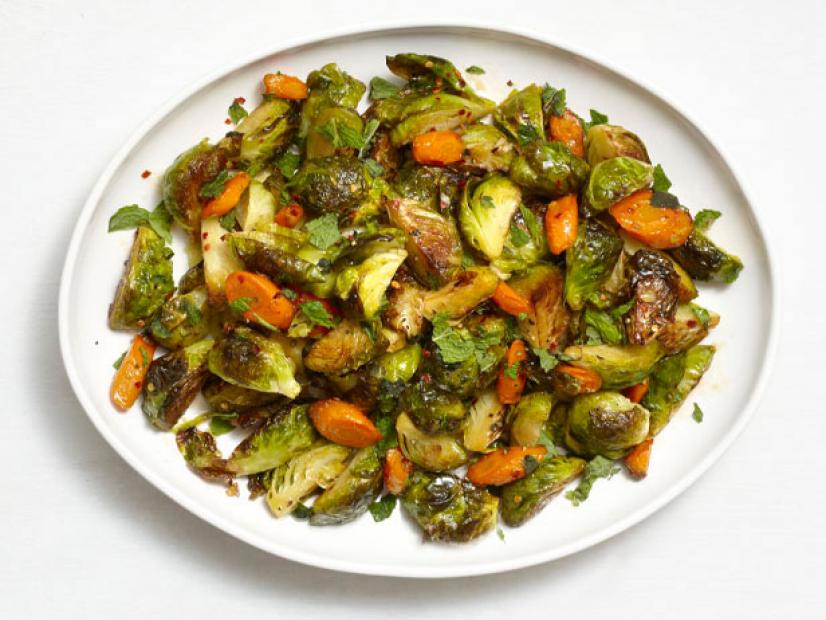
Roasted Brussels Sprouts & Carrots

Photo: The Food Network

As a kid, there were certain vegetables I did my best to avoid eating. In fact, I have a few distinct memories of sitting by myself at the dinner table, making designs with my green beans while the rest of my family went on to other things. And, like a typical kid, I also stayed away from broccoli, peas, cauliflower, and brussels sprouts. I did, however, love things like tomatoes, cucumbers, salads, corn, and potatoes (as long as they weren’t mashed).

As I got older, my tastes changed, and I grew to love most everything that used to give me the heebie jeebies. Give me green beans, broccoli, peapods, peppers, avocados – you name it, I eat it. Except for brussels sprouts. I kept trying them, again and again, having heard somewhere that you have to try something at least seven to ten times before it starts to become appealing. But it just wasn’t working. Until my husband found a recipe online for roasted brussels sprouts and carrots. We were trying to shake up the typical Thanksgiving side dish and this sounded interesting. Funny thing is that I haven’t been a fan of cooked carrots (I prefer them raw) but I figured, why not? So we tried it. And lo and behold – turns out I DO like brussels sprouts! We found the original recipe on Food Network, then tweaked it a bit by substituting coconut oil instead of vegetable oil, then omitted the sugar and salt. And the result was amazing. A little healthier, too. The coconut oil replaces the sweetness of the sugar and, by also not adding salt, it’s a better heart-healthy dish. (You won’t miss it.) My family loves it, and it’s incredibly easy, too. It works well as a side dish for any meal, really, but helps to balance out a time when we typically overindulge on tasty holiday delectables . . . 😉 Check it out and let me know what you think!

Happy eating!

Prep time: 5-10 min. Cook time: 25 min. Total time: 30-35minutes

1 pound brussels sprouts (washed and quartered)

1/2 pound sliced carrots

2 tablespoons coconut oil* (warmed slightly to liquid)

juice of 1/2 lime

1 clove garlic (minced or grated)

pinch of red pepper flakes

chopped mint (to taste – optional)

Whisk together coconut oil, lime juice, garlic, and red pepper flakes. In a bowl, drizzle oil mixture over brussels sprouts and carrots and toss until coated. Place on a baking sheet. Roast at 450° until tender, about 25 minutes. Toss with more lime juice and chopped mint, to taste. Serve immediately.

*You may substitute olive oil for the coconut oil, however you’ll need to reduce the oven temperature to about 350° and cook for a longer time.

The information provided on this website is intended for educational purposes only and is, in no way, a substitute for professional medical advice. ALWAYS talk with your doctor about conditions, medications, and concerns you have about your health and work together to determine the best course of action for you.

Muscle Strength and Bone Density

I was recently asked about the relationship between muscle strength and bone density. I confessed that I knew there was a direct correlation, but that I wasn’t sure of the intricacies of such a relationship. And I will admit to you that I was irritated with myself at not knowing the answer. So, true to my nerdy nature, I did a little research . . .

Turns out, there IS something to this little relationship between the two. I poked around some websites and looked at a few rather involved case study reports, and came up with a simpler explanation that I hope will make sense – and possibly inspire you to think about how this may affect your own health.

First, a couple of definitions. Osteoporosis is something we hear about frequently. Simply put, it’s the weakening of our bones. It can cause us to have trouble walking, contribute to skeletal imbalance, and make our bones so brittle that fractures are common, especially in our hips, backs, and wrists. Sarcopenia isn’t quite so well known. It’s the weakening of our muscles. As we age, we lose muscle mass and strength, especially once we reach our 40s and beyond, but may start as early as 30 if we’re not active or don’t eat well. (Eek!) This also contributes to issues with balance and performing everyday activities such as walking, bending, lifting, etc. When we lose muscle, we get weaker, which means our muscles have trouble helping our bones keep us upright, which eventually leads to our bones getting weaker, too. Do you see where I’m going with this?

The solution? Healthy eating habits and regular exercise, specifically strength training. Here’s why. H.M. Frost came up with the Mechanostat Theory, which basically states that our bones seem to have an ability to recognize increased demand, or stress, put on our muscles and bones and responds by making more bone tissue. It’s like a biological mechanism that’s triggered when the bone is under repeated stress, i.e. strength training. Plus, and this is pretty cool, bone growth appears to happen most where the stress, or loading, is greatest – mainly, our legs, hips, wrists, and spines. So putting our bones under stress can actually call bone-building cells into action, even as we age. That means that we can slow, and possibly reverse, the weakening of our muscles and bones!

The long and short of it is this: when we build our muscles through exercise, we can also build our bones in the process. And when we do this, there’s a host of benefits. Stronger muscles lead to an increase in balance and stability, which lead to fewer falls and fractures. And by building muscle, we increase bone density which means a decrease in the risk of osteoporosis. And just by being stronger, we’re able to grow old and enjoy all kinds of our favorite activities without too many issues. Wow! And that’s just the start! There’s a lot more that I can get into, but for now I hope that you have an idea of how muscle and bone affect each other and that learning about it causes you to think about ways you can incorporate exercise into your routine so that you can enjoy what you love to do for as long as you can.

Stay strong!

https://www.health.harvard.edu/staying-healthy/strength-training-builds-more-than-muscles

https://www.ncbi.nlm.nih.gov/pmc/articles/PMC6279907/

https://www.mayoclinic.org/healthy-lifestyle/fitness/in-depth/strength-training/art-20046670

https://www.mayoclinic.org/diseases-conditions/osteoporosis/symptoms-causes/syc-20351968

https://my.clevelandclinic.org/health/diseases/23167-sarcopenia

The information provided on this website is intended for educational purposes only and is, in no way, a substitute for professional medical advice. ALWAYS talk with your doctor about conditions, medications, and concerns you have about your health and work together to determine the best course of action for you.